Search results 41 Found
Bonfire The Chestnut Gentleman
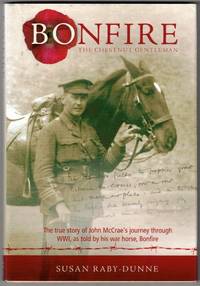
Bonfire The Chestnut Gentleman
Raby-Dunne, Susan
- Publisher: Monday Morning Writers Group
- Date published: 2012
- ISBN: 9780987785633
9780987785633: Monday Morning Writers Group. Near Fine in Near Fine dust jacket. 2012. First Edition. Hardcover. 098778563X . Signed by Author; DJ and boards show very light shelf wear.; A bright, solid book. Dust jacket in Mylar jacket protector. Inscribed by the author on title page. ; Large 8vo 9" - 10" tall; 150 pages; ""Bonfire," is the powerful true story behind the beloved WWI poem, In Flanders Fields written by Lt.Col. John McCrae, and the reason we wear the red poppy to this day as an international symbol of Remembrance. Although fictionalized and told by McCrae's war horse, Bonfire, the story is closely based on the real history and events of the time. Bonfire was with John McCrae from the beginning of WWI at Camp Valcartier, Quebec, September 1914, to the end of McCrae's life in France in January of 1918. All of McCrae's letters and diaries from the war had mention of Bonfire, his antics and how much that horse meant to his master. Bonfire was McCrae's lifeline to decency, beauty and sanity during those traumatic days." .
ainsworthbooks-17.50-75c214ad6c25e1a68d7f878bd8de2ae1
Remembering World War I: An Engineer's Diary of the War
Remembering World War I: An Engineer's Diary of the War
Charles Edward Dilkes
- Publisher: Juliet Publishing
- Date published: 2014
- ISBN: 9780692028612
Juliet Publishing, 2014. Book. Fine. Hardcover. Inscribed by Author(s). 1st Edition. Very slight sunning to spine of dust jacket which is now in protective mylar. Clean, tight copy inscribed by editor Virginia Dilkes/daugher of Charles Edward Dilkes. 192pp..
veronicasbooks-24.00-453597462dec6c2a50bd112a68a006cf
The Wwi Diary of Pfc Wilbur Baker: From the Farm to the Front
The Wwi Diary of Pfc Wilbur Baker: From the Farm to the Front
Priscilla Rall
Signed Copy Collectible-Good. Inscribed by author on title page. Writing on page edges. (World War I History, Biography, Maryland Military men and women)
wonderbooka-27.04-fa750c7534384db620e5335ac914b617
A World War 1 Adventure: The Life and Times of RNAS Bomber Pilot Donald E. Harkness
A World War 1 Adventure: The Life and Times of RNAS Bomber Pilot Donald E. Harkness
Harkness, Bruce W. Jeffrey T. Timothy D. Christopher W. & Donald E. Harkness, Jr.
- Publisher: Authorhouse
- Date published: 2014
- ISBN: 9781496914101
Bloomindton, Indiana: Authorhouse. Near Fine in Fine dust jacket. 2014. 1st Edition; 1st Printing. Hardcover. 1496914104 . Hardcover with dustjacket, this copy is inscribed and signed by two of the authors: Jeffrey Harkness and Donald E. Harkness, the book is in excellent condition with one minor flaw: mild edge-rubbing to the cloth on the back cover, the jacket is also in excellent condition with no remarkable flaws, included is a promotional bookmark for the book, "A deeply personal and revealing eyewitness narrative of one airman's life as a bomber pilot in England's RNAS (Royal Naval Air Service) in WWI. It is a true story, an adventure, and a war memoir carefully constructed from Captain Donald E. Harkness's unpublished diaries, letters, sketches and photographs - only recently uncovered..." ; ; 562 pages; Signed by Author .
mainlybooks-33.00-4ecdf96cd5a3a86ff7f756a4d98929d6
An American Pilot in the Skies of France : The Diaries and Letters of Percival T. Gates, 1917-1918
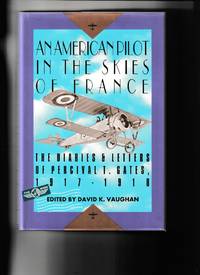
An American Pilot in the Skies of France : The Diaries and Letters of Percival T. Gates, 1917-1918
David K. Vaughan
- Publisher: Wright State University Press
- Date published: 1992
Very good condition. An account of an American pilot flying in a US Air Service squadron in France during World War I. Gates flew with the 185th Aero Squadron and the 27th Aero Squadron in the fall of 1918. Compiled and edited by Vaughan. Signed by Vaughan on title p[age.
yankeeflier-35.00-44c3cee7a9c40e190dc00888c919247d
Sailors of the Air: The 1917 - 1919 Letters and Diary of USN CMM/A Irving Edward Sheely. Edited by His Nephew Larence D. Sheely.
Sailors of the Air: The 1917 - 1919 Letters and Diary of USN CMM/A Irving Edward Sheely. Edited by His Nephew Larence D. Sheely.
Sheely, Irving Edward, USN CMM/A. Edited by His Nephew Larence D. Sheely.
- Publisher: The University of Alabama Press, (1993).
- Date published: 1993
Tascaloosa: The University of Alabama Press, (1993). Signed by Lawrence âLarryâ Sheely. Octavo, red boards (hardcover), xii, 221 pp. Fine (As New) in a Fine (As New) dust jacket. From dust jacket: In the winter of 1917, with most of the world at war, 23-year-old Irving Edward Sheely of Albany, New York, enlisted in Naval Aviation and began his training at Pensacola Naval Air Station. When Congress declared war on Germany on April 6, 1917, the combined strength of aviation within the Navy and Marine Corps was 48 officers, 239 enlisted men, 54 airplanes, 1 airship, and 1 air station. Lieutenant Kenneth Whiting immediately recruited seven volunteer officers and 122 volunteer enlisted men with orders to go directly to France as the First Aeronautical Detachment. By June, the first organized contingent of American forces arrived in the combat zone at St. Nazaire, France -- woefully unprepared to take on the mighty submarine force of imperial Germany. Among this small detachment was Landsman Machinist Mate Second Class Irving E. Sheely. Trained by American and foreign officers, using both American and foreign aircraft, Sheely learned aviation and aviation combat at the heart of the action. He served as Observer / Gunlayer with Navy Lieutenant Kenneth MacLeish as pilot, and the two participated in some of the first antisubmarine air patrols in history, including a sea landing to rescue a downed crew. While at Clermont-Ferrand, Sheely developed an improved bombsight, for which he was praised by MacLeish. Following the Armistice, Sheely participated in the closing of the Navy base at Eastleigh, England, and returned io the United States in November 1918.
lighthousebooksa-35.00-dfef4763cc9e9a95fa36546e0602dc65
The Wwi Diary of Pfc Wilbur Baker: From the Farm to the Front
The Wwi Diary of Pfc Wilbur Baker: From the Farm to the Front
Priscilla Rall
Signed Copy Collectible-Good. Inscribed by author on title page. Writing on page edges. (World War I History, Biography, Maryland Military men and women)
wonderbooka-47.70-fa750c7534384db620e5335ac914b617
War Diaries and Letters 1914-1918. Edited by Gary Sheffield and John Bourne. SIGNED BY THE EDITOR
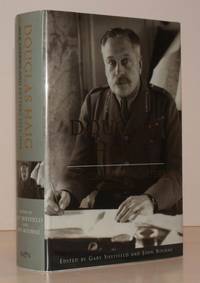
War Diaries and Letters 1914-1918. Edited by Gary Sheffield and John Bourne. SIGNED BY THE EDITOR
HAIG Douglas
- Publisher: Weidenfeld & Nicolson,
Weidenfeld & Nicolson,, [2005]. 8vo., First Edition, with plates; black cloth, gilt back, green endpapers, a near fine copy in unclipped dustwrapper. SIGNED BY SHEFFIELD ON TITLE.
islandbooks-48.81-3fb2e5b50696886ac7ceed8988a0ce43
MEMORIES OF FORTY-EIGHT YEARS' SERVICE
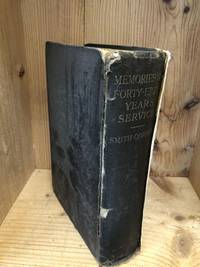
MEMORIES OF FORTY-EIGHT YEARS' SERVICE
Smith-Dorrien, Horace
- Publisher: John Murray
- Date published: 1925
John Murray, 1925. Not Stated Presumed First Edition. Hardcover. Poor/No Dust Jacket. xii, 522 pages. Faded gold lettering on the spine. Front hinge of the cover has been taped with white tape. Front hinge in cracked. Front free endpaper has a tipped on inscription, not signed but with a 'With the Author's Compliments' on it dated 1925. Some writing in the text with pencil. this is a reading copy only of this military autobiography written by General Sir Horace Smith-Dorrien from his diaries. Starting with the Zulu War and ending with WWI. Illustrated with 10 b/w images and 27 maps (two foldouts). This is a heavy book and will require additional shipping charges.
beaconbooks-50.00-7a6fd7c230611884b7f9de9f9ac84740
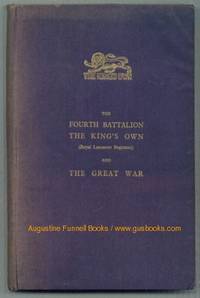
The FOURTH BATTALION THE KING'S OWN (Royal Lancaster Regiment) and THE GREAT WAR (signed)
The FOURTH BATTALION THE KING'S OWN (Royal Lancaster Regiment) and THE GREAT WAR (signed)
Wadham, Lieut.-Colonel W.F.A., and Captain J. Crossley
- Publisher: Privately Published (printed by Crowther & Goodman)
London: Privately Published (printed by Crowther & Goodman) Book. Fair. Hardcover. Inscribed & Signed by Author. First Edition.. Small octavo. No date, but published in late 1935 or early 1936, since Wadham's contribution (ending at page 19) is dated 13th November, 1935, and Crossley's "Foreword to Part II" is dated December of the same year. Wadham writes, "These notes have been compiled, more or less in the form of a diary, with a view to placing on record the services of those who voluntarily came forward to serve their country in its hour of need." This copy from the library of 2nd Lt. I. (Irvine) B. Rouse of the battalion, who is listed thrice in the appendices, once in "Additional Nominal Roll of Officers who served with the I/4th Battalion The King's Own Royal Regt. (in order of joining)," once in a list of those wounded in action, and lastly in the list of those who received the Military Cross. Wadham has written his inscription ("A souvenir/from") and signed beneath Rouse's printed name. Uncommon signed. Blue cloth w/battalion's crest/lettering in gilt to front cover, 136 pages + XXIIII (24) pages of appendices/index. Appendices include: (A) nominal roll of officers mobilized with the battalion as of August 4, 1914; (B) the roll of officers who proceeded overseas (May 3, 1915); (C) an additional nominal roll of officers who served with the battalion; (D) officers' casualties/prisoners of war/awards; (E) a list of the rank and file killed in action or who died of their wounds; (F) a list of the rank and file wounded in action; (G) a list of rank and file missing/reported dead, wounded and prisoners, wounded and missing, missing, and prisoners of war; (H) rank and file awards; (I) an extract from the supplement (June 28, 1918) to the London Gazette (June 25, 1918; (J) an extract from the supplement (September 14, 1917) to the London Gazette (September 14, 1917); and (K) an extract from the supplement (June 28, 1918) to the London Gazette (June 25, 1918). Strongly cocked, sunned spine/edges, wear to corners/spine ends, some cover soil, scuffing, light edge soil, Rouse's name highlighted in pink at all three appearances in the appendices..
augustinefunnellbooks-50.00-1cb57cb6aa16eb242640c9d7d6e49b9b
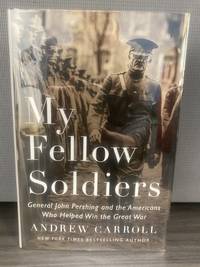
My Fellow Soldiers: General John Pershing and the Americans Who Helped Win the Great War
My Fellow Soldiers: General John Pershing and the Americans Who Helped Win the Great War
Andrew Carroll
- Publisher: Penguin Press
- Date published: 2017-04
- ISBN: 9781594206481
Signed, First Edition, Mint Condition/CollectibleBook appears to be unread/untouched.Dust jacket is in pristine, mint condition and protected in Mylar. Signed by the author, Andrew Carroll, on the title page. First edition print. From the New York Times bestselling author of War Letters and Behind the Lines, Andrew Carroll's My Fellow Soldiers draws on a rich trove of both little-known and newly uncovered letters and diaries to create a marvelously vivid and moving account of the American experience in World War I, with General John Pershing featured prominently in the foreground.Andrew Carroll's intimate portrait of General Pershing, who led all of the American troops in Europe during World War I, is a revelation. Given a military force that on the eve of its entry into the war was downright primitive compared to the European combatants, the general surmounted enormous obstacles to build an army and ultimately command millions of U.S. soldiers. But Pershing himselfâoften perceived as a harsh, humorless, and wooden leaderâconcealed inner agony from those around him: almost two years before the United States entered the war, Pershing suffered a personal tragedy so catastrophic that he almost went insane with grief and remained haunted by the loss for the rest of his life, as private and previously unpublished letters he wrote to family members now reveal. Before leaving for Europe, Pershing also had a passionate romance with George Patton's sister, Anne. But once he was in France, Pershing fell madly in love with a young painter named Micheline Resco, whom he later married in secret.Woven throughout Pershing's story are the experiences of a remarkable group of American men and women, both the famous and unheralded, including Harry Truman, Douglas Macarthur, William "Wild Bill" Donovan, Teddy Roosevelt, and his youngest son Quentin. The chorus of these voices, which begins with the first Americans who enlisted in the French Foreign Legion 1914 as well as those who flew with the Lafayette Escadrille, make the high stakes of this epic American saga piercingly real and demonstrates the war's profound impact on the individuals who servedâduring and in the years after the conflictâwith extraordinary humanity and emotional force.Thank you for supporting Casa Pacifica Centers for Children & Families! To learn more please visit: www.casapacifica.org
casapacifica-50.00-accca036805512d2dbece6a4ffba20a4
An Anzac Diary.
An Anzac Diary.
Treloar, J.L.; Treloar, Alan.
- Publisher: Alan Treloar
- Date published: 1993
- ISBN: 9780646157320
Armidale: Alan Treloar, 1993. HEAVY. xviii, 377pp, index, appendices, bw ills, maps, endpaper maps. Green cloth in jacket. Light edge wear to jacket. SIGNED and inscribed to a LT Col by Alan Treloar on acknowledgements page. John Linton Treloar sailed in a ship of the First Convoy and kept a diary from that time until March 1917 with several interruptions due to illness. He served at Gallipoli and evacuated in September 1915 due to life threatening illness. In early 1916 he was appointed an original officer of 1 Squadron AFC and served in Egypt and France. . Signed by Author. First Edition. Hard Cover. Very Good/Very Good. 4to.
lawrencejones-63.99-2c8b069a36e49f493423c33b520f2d36
For King and Country, The 1914-18 War Diaries of J. M. Laidlaw
For King and Country, The 1914-18 War Diaries of J. M. Laidlaw
Rogers, J. G. (ed.)
- Publisher: Pryor Publications
- Date published: 1985
Whitstable: Pryor Publications, 1985. 1st edition. As New. octavo. dust jacket 222pp., text ills., b/w pls., maps, appends., index, Based on the diaries of a Victorian soldier who served in the Middle-East in WWI with the 9th Light Horse Regiment. Copy 245 of a limited hardcover edition & signed by J. G. Rogers on the dedication page
andrewbarnesbooksellers-75.00-9efdadccf4c4c9a1b908ae39f0cc58cd
Come to the Cook-house Door!; A V. A. D. in Salonika
Come to the Cook-house Door!; A V. A. D. in Salonika
Whitsed, Juliet de Key
- Publisher: Herbert Joseph
- Date published: 1932
London: Herbert Joseph, 1932. First Edition. Hardcover. Very good/good. Duodecimo size, 185 pp., inscribed by Juliet de Key Whitsed. "Come to the Cook-house Door!" comprises the autobiography of Juliet de Key Whitsed, who served as a V. A. D. (Voluntary Aid Detachment) during World War I, in Salonika (present-day Thessaloniki in Greece); told with charm and wit, the story elucidates the hardships of the war from a civilian's perspective, in the form of letters and diary entries. This volume is the first edition, and is inscribed by the author to Henry W. Shoemaker (1880-1958), a noted American folklorist and conservationist who worked in European embassies as a diplomat; his bookplate is also tipped in on the front paste-down endpaper. ___DESCRIPTION: Full white cloth, black lettering and a line drawing of a trumpet on the front board, black lettering on the spine, title page with same line drawing of a trumpet; duodecimo size (7.5" by 5.25"), pagination: [1-6] 7 [8-10] 11-185, inscribed by Juliet de Key Whitsed "Colonel Henry W Shoemaker / With all good wishes / from Juliet de Key Whitsed / Johannesburg. S. Africa. / July 1938." on the verso of the front free endpaper. Tasteful prior owner bookplate on the front paste-down endpaper belonging to Henry W. Shoemaker, the recipient of the inscription. In a red paper dust jacket with black lettering and silhouette of a bugle-player on the front panel, black lettering and ruled borders with original price of "3/6" on the spine, and a description of the book on the front flap. ___CONDITION: Volume is very good, with clean boards, corners without rubbing, a strong, square text block with solid hinges, and the interior is clean and bright; some sunning to the spine, abraded area on the spine of about one inch, corners gently bumped, front board is slightly cocked, prior owner markings in pencil in the gutter of the Foreword, reading "gift of Mrs. H. A. Shoemaker 10/9/63", and there is a newspaper clipping glued to the rear paste-down endpaper, regarding the death of General Paul Henrys (1862-1943), commander of the French army on the Salonika front during the First World War, where this book takes place. The dust jacket is good only, unclipped with the original price on the spine, all pieces present but front panel is detached from the spine, clean overall with minor soiling including a small area with white on the front panel, slight edge wear to the top edge, chipping to the head of the spine (but does not obscure text), and there is a loss of about three inches to the bottom of the spine (please see pictures and request more if needed). ___POSTAGE: Â International customers, please note that additional postage may apply as the standard does not always cover costs; please inquire for details. ___Swan's Fine Books is pleased to be a member of the ABAA, ILAB, and IOBA and we stand behind every book we sell. Please contact us with any questions you may have, we are here to help.
swansfinebooks-385.00-c9cf20d744dbc3343197cbc1d39fc809
1919 to 1922 Original Handwritten Diary of an American Wwi Soldier Returning Home to a Country in Upheaval Amid Fears of Communist Revolution
1919 to 1922 Original Handwritten Diary of an American Wwi Soldier Returning Home to a Country in Upheaval Amid Fears of Communist Revolution
Unknown
- Date published: 1919
- Format: Manuscript
On offer is a fascinating record of an American army officer in France immediately following the end of World War One. The author of this notebook is uncertain. Context does suggest that he is American, as his travels eventually take him to Pontanezen Camp--a huge American base in northwestern France from where American troops were repatriated to the United States. The journal begins with a reference to the nascent League of Nations on page 2: "Great General Council and minor councils, decrees of former, binding and enforced by armies of combined states (only 15 powers)." The next page bears the first date: February 9, 1919. In this entry, the author details a train trip from Rouen across northern Europe to Vimy Ridge, where he visited military graveyards. He specifically references the 5th, 7th, 14th, 15th, and 16th Canadian Battalions. Vimy Ridge is Canada's most celebrated military victory in WWI. As the author of this diary travels across the countryside, he remarks on enemy troops: "About 4 boxcars on end for German prisoners" (February 11, 1919). He also comments on museums he visited, hotels he stayed at, and the many things he sees as he crosses the country. He enjoys films where he can and operas as well. Throughout March, he details life in and around Pontanezen Camp, and on March 30 he ships out, arriving back in the United States at Boston Harbor on April 7. On May 1, after a wandering train trip, he arrives home in Oberlin, Ohio. Along the way, his notes are full of descriptions of what he sees. Of interest is his reference to the so-called "Red Scare" that was sweeping the United States at the time. The Red Scare was a period in the post-WWI United States marked by perceived fear of radical far-left extremists and communist revolution. This contributed to the wave of white supremacist terrorism and race riots that swept across the United States in early to mid 1919. Hundreds of thousands of returning veterans were dumped into a non-existent labour market amid rising fears of Bolshevism. Our author writes: "At public square hundreds and thousands of reds..." (May 1, 1919). On June 2 he registered for college, with context suggesting Temple University in Philadelphia. The balance of the journal is a detailed description of the author's academic and social life, with a heavy emphasis on the latter. His journal ends on June 22, 1922. Measuring 4.25 inches by 6.75 inches, this small notebook resembles the type of field message notebook that officers carried. The pages are marked in a light grid pattern. There are 94 pages and the notebook is 95 percent complete. The covers are missing, but the stapled binding is in good condition. The pages are in good condition and the handwriting is legible. The entries do not follow a strict daily entry system, as the author skips days from time to time. For a military historian, the author's travels across war-torn France and Belgium provide wonderful detail about the conditions in the months immediately following the war. For a social historian, his observations as he travels in Europe and across eastern United States offer an excellent window into this time of tremendous social upheaval in post-WWI America. Keywords: league of nations; pontanezen camp; vimy ridge; red scare; first red scare; red summer; post-wwi france; post-wwi america; americana; handwritten; manuscript; document; letter; autograph; writer; hand written; documents; signed; letters; manuscripts; diary; diaries; journals; personal history; social history; historical; holograph; writers; autographs; personal; memoir; memorial; antiquité, contrat; vélin; document; manuscrit; papier antike; brief; pergament; dokument; manuskript; papier oggetto d'antiquariato; atto; velina; documento; manoscritto; carta antigüedad; hecho; vitela; documento; manuscrito; papel.
katzfinemanuscripts-492.99-bcba7b098ebb1f6df6d41484da1f590d
1919 Diary of American Soldier From the 56th Infantry, Ezra Skow, Stationed in Occupied Germany Following Wwi, Describing the Duties and Daily Life of a Us Soldier
1919 Diary of American Soldier From the 56th Infantry, Ezra Skow, Stationed in Occupied Germany Following Wwi, Describing the Duties and Daily Life of a Us Soldier
Ezra Skow, Co. I, 56th Regiment Infantry
- Publisher: Occupied Germany, Coblenz, Benton, PA, 56th Infantry
- Date published: 1919
- Format: Softcover
On offer is a superb pocket notebook kept by an American soldier in occupied Germany in the months immediately following World War One (WW1). The author of this notebook is Ezra Skow. Little is known of Skow's early life. He was born in 1892 and enlisted in the U. S. Army in about September, 1918 at the age of 25 or 26. Burial records in Benton PA indicate that he was attached to the 156th Infantry Regiment. However, there was no 156th Infantry in the United States Order of Battle in WWI. In his notebook, Skow records that he served in the 56th Infantry. This accords with the record of service of the 56th Infantry Regiment. The 56th Infantry Regiment was a regular infantry regiment in the United States Army. Its roots date back to the American Civil War where it served in the North's Army of the Potomac. It originated from personnel of the 17th Infantry Regiment in 1917 and fought in the region of Metz during World War I. In April 1919 a battalion of the 56th entered Metz as an honour guard for the Commanding General of the American Expeditionary Force, John J. Pershing. Skow was married before joining the army. His wife, Laura, lived until 1987, passing away at the age of 93. Skow himself died in 1947 at the age of 57. His entries take the form of letters to his wife. They cover the period Jan 11, 1919 through June 25 1919. In his diary, Skow records several of the towns and cities in which his unit was stationed including Metz, France, Mulheim, Metternich and other places in and around the city of Coblenz, Germany. His entries speak about the day-to-day existence of a private soldier: "This is some place. Gee, I wish I was home now. I would tell you a lot. The women are carrying their things on their back when they go to the store" [Jan 13]; "...I wrote you a letter tonight and send you the worlds clock too as I saw that today over at the city. And I was to see Charley Chaplin in the front line trenches and it was good. I would like to see you now....I sit here at a Dutch table now writing notes and the Dutch man is reading the paper and his wife is talking out of the front window and you can see they are like [ ] but not quite as bad. Your Husband Ezra Skow xxxx" [May 2]; "...I was over to Coblenz today and wrote you a letter. And it is a fine day. I didn't do very much today. But believe me I would love to be home to loved you again. As I am getting tired of this life and will be able to tell you all about it when I get home...Your most [ ] lonely husband this side of the water. Ezra Skow" [May 12]. On June 4th, he writes that he has learned his unit is going to be leaving the Coblenz area and hopefully heading home to the United States. In fact, this is exactly what happened. By June 23rd, he is in Fort Dix NJ and on the 25th, he is out of the army. : "...I am out of the army now. Coming home to you dear..." [June 25]. There are several other pages of note which include, among other things, the names and addresses of several other men-likely men he met and befriended. For a historian, this is an outstanding piece of primary source material. It details the very ordinary day-to-day life of a soldier in WWI, capturing his duties and his longing for home. For a regimental historian, this fills in details of the history of their regiments. For a genealogist, it offers some links to other Americans who served in that regiment. Measuring 5.25 inches by 3.5 inches, this notebook contains 72 pages and is 85% complete. The book is in good condition. The binding and pages are intact. His handwriting is cramped but generally legible.; Manuscripts; 24mo 5"-6" tall; 72 pages; Keywords: handwritten, manuscript, document, letter, autograph, writer, hand written, documents, signed, letters, manuscripts, historical, holograph, writers, autographs, personal, memoir, memorial, antiquité, contrat, vélin, document, manuscrit, papier antike, brief, pergament, dokument, manuskript, papier oggetto d'antiquariato,...
katzfinemanuscripts-513.99-d10701ae49d51d895c42c7194eff8557
1919 to 1922 Original Handwritten Diary of an American Wwi Soldier Returning Home to a Country in Upheaval Amid Fears of Communist Revolution
1919 to 1922 Original Handwritten Diary of an American Wwi Soldier Returning Home to a Country in Upheaval Amid Fears of Communist Revolution
Unknown
- Date published: 1919
- Format: Manuscript
On offer is a fascinating record of an American army officer in France immediately following the end of World War One. The author of this notebook is uncertain. Context does suggest that he is American, as his travels eventually take him to Pontanezen Camp--a huge American base in northwestern France from where American troops were repatriated to the United States. The journal begins with a reference to the nascent League of Nations on page 2: "Great General Council and minor councils, decrees of former, binding and enforced by armies of combined states (only 15 powers)." The next page bears the first date: February 9, 1919. In this entry, the author details a train trip from Rouen across northern Europe to Vimy Ridge, where he visited military graveyards. He specifically references the 5th, 7th, 14th, 15th, and 16th Canadian Battalions. Vimy Ridge is Canada's most celebrated military victory in WWI. As the author of this diary travels across the countryside, he remarks on enemy troops: "About 4 boxcars on end for German prisoners" (February 11, 1919). He also comments on museums he visited, hotels he stayed at, and the many things he sees as he crosses the country. He enjoys films where he can and operas as well. Throughout March, he details life in and around Pontanezen Camp, and on March 30 he ships out, arriving back in the United States at Boston Harbor on April 7. On May 1, after a wandering train trip, he arrives home in Oberlin, Ohio. Along the way, his notes are full of descriptions of what he sees. Of interest is his reference to the so-called "Red Scare" that was sweeping the United States at the time. The Red Scare was a period in the post-WWI United States marked by perceived fear of radical far-left extremists and communist revolution. This contributed to the wave of white supremacist terrorism and race riots that swept across the United States in early to mid 1919. Hundreds of thousands of returning veterans were dumped into a non-existent labour market amid rising fears of Bolshevism. Our author writes: "At public square hundreds and thousands of reds..." (May 1, 1919). On June 2 he registered for college, with context suggesting Temple University in Philadelphia. The balance of the journal is a detailed description of the author's academic and social life, with a heavy emphasis on the latter. His journal ends on June 22, 1922. Measuring 4.25 inches by 6.75 inches, this small notebook resembles the type of field message notebook that officers carried. The pages are marked in a light grid pattern. There are 94 pages and the notebook is 95 percent complete. The covers are missing, but the stapled binding is in good condition. The pages are in good condition and the handwriting is legible. The entries do not follow a strict daily entry system, as the author skips days from time to time. For a military historian, the author's travels across war-torn France and Belgium provide wonderful detail about the conditions in the months immediately following the war. For a social historian, his observations as he travels in Europe and across eastern United States offer an excellent window into this time of tremendous social upheaval in post-WWI America. Keywords: league of nations; pontanezen camp; vimy ridge; red scare; first red scare; red summer; post-wwi france; post-wwi america; americana; handwritten; manuscript; document; letter; autograph; writer; hand written; documents; signed; letters; manuscripts; diary; diaries; journals; personal history; social history; historical; holograph; writers; autographs; personal; memoir; memorial; antiquité, contrat; vélin; document; manuscrit; papier antike; brief; pergament; dokument; manuskript; papier oggetto d'antiquariato; atto; velina; documento; manoscritto; carta antigüedad; hecho; vitela; documento; manuscrito; papel.
katzfinemanuscripts-699.06-bcba7b098ebb1f6df6d41484da1f590d
1919 Diary of American Soldier From the 56th Infantry, Ezra Skow, Stationed in Occupied Germany Following Wwi, Describing the Duties and Daily Life of a Us Soldier
1919 Diary of American Soldier From the 56th Infantry, Ezra Skow, Stationed in Occupied Germany Following Wwi, Describing the Duties and Daily Life of a Us Soldier
Ezra Skow, Co. I, 56th Regiment Infantry
- Publisher: Occupied Germany, Coblenz, Benton, PA, 56th Infantry
- Date published: 1919
- Format: Softcover
On offer is a superb pocket notebook kept by an American soldier in occupied Germany in the months immediately following World War One (WW1). The author of this notebook is Ezra Skow. Little is known of Skow's early life. He was born in 1892 and enlisted in the U. S. Army in about September, 1918 at the age of 25 or 26. Burial records in Benton PA indicate that he was attached to the 156th Infantry Regiment. However, there was no 156th Infantry in the United States Order of Battle in WWI. In his notebook, Skow records that he served in the 56th Infantry. This accords with the record of service of the 56th Infantry Regiment. The 56th Infantry Regiment was a regular infantry regiment in the United States Army. Its roots date back to the American Civil War where it served in the North's Army of the Potomac. It originated from personnel of the 17th Infantry Regiment in 1917 and fought in the region of Metz during World War I. In April 1919 a battalion of the 56th entered Metz as an honour guard for the Commanding General of the American Expeditionary Force, John J. Pershing. Skow was married before joining the army. His wife, Laura, lived until 1987, passing away at the age of 93. Skow himself died in 1947 at the age of 57. His entries take the form of letters to his wife. They cover the period Jan 11, 1919 through June 25 1919. In his diary, Skow records several of the towns and cities in which his unit was stationed including Metz, France, Mulheim, Metternich and other places in and around the city of Coblenz, Germany. His entries speak about the day-to-day existence of a private soldier: "This is some place. Gee, I wish I was home now. I would tell you a lot. The women are carrying their things on their back when they go to the store" [Jan 13]; "...I wrote you a letter tonight and send you the worlds clock too as I saw that today over at the city. And I was to see Charley Chaplin in the front line trenches and it was good. I would like to see you now....I sit here at a Dutch table now writing notes and the Dutch man is reading the paper and his wife is talking out of the front window and you can see they are like [ ] but not quite as bad. Your Husband Ezra Skow xxxx" [May 2]; "...I was over to Coblenz today and wrote you a letter. And it is a fine day. I didn't do very much today. But believe me I would love to be home to loved you again. As I am getting tired of this life and will be able to tell you all about it when I get home...Your most [ ] lonely husband this side of the water. Ezra Skow" [May 12]. On June 4th, he writes that he has learned his unit is going to be leaving the Coblenz area and hopefully heading home to the United States. In fact, this is exactly what happened. By June 23rd, he is in Fort Dix NJ and on the 25th, he is out of the army. : "...I am out of the army now. Coming home to you dear..." [June 25]. There are several other pages of note which include, among other things, the names and addresses of several other men-likely men he met and befriended. For a historian, this is an outstanding piece of primary source material. It details the very ordinary day-to-day life of a soldier in WWI, capturing his duties and his longing for home. For a regimental historian, this fills in details of the history of their regiments. For a genealogist, it offers some links to other Americans who served in that regiment. Measuring 5.25 inches by 3.5 inches, this notebook contains 72 pages and is 85% complete. The book is in good condition. The binding and pages are intact. His handwriting is cramped but generally legible.; Manuscripts; 24mo 5"-6" tall; 72 pages; Keywords: handwritten, manuscript, document, letter, autograph, writer, hand written, documents, signed, letters, manuscripts, historical, holograph, writers, autographs, personal, memoir, memorial, antiquité, contrat, vélin, document, manuscrit, papier antike, brief, pergament, dokument, manuskript, papier oggetto d'antiquariato,...
katzfinemanuscripts-728.47-d10701ae49d51d895c42c7194eff8557
1921 Diary of a Philadelphia Reverend, Salesman and Wwi Veteran Recording His Work and Religious Endeavors
1921 Diary of a Philadelphia Reverend, Salesman and Wwi Veteran Recording His Work and Religious Endeavors
Reverend Howard Dawson Hetrich (Sometimes Hetrick)
- Date published: 1921
- Format: Hardcover
On offer is the small yet interesting diary of Reverend Howard Dawson Hetrich (sometimes Hetrick) (1889-1953) [SEE BIO NOTES AT END OF LISTING]. At the time he kept this diary, Hetrich was 32-years-old, single, living in Philadelphia, working in sales and as a Pastor. He discusses his personal life only briefly. This diary is chock-full of short, factual entries about his work life and religious occupation. At the back of the book, he kept a detailed record of his earnings over the course of the year and even notes details like his income tax. His annual sales for 1921 to $8, 203. Some brief excerpts follow to give the flavour of the diary: No del. -on 27th St. $28.00 for orders. Only canvassed few hours. Letter to Mrs. []. Very cold and clear [Jan 19]. To Newton's for dinner. To Sunday S [school? ]. Preached in church in PM. Many out to service. To Mench's in eve after supper. Prayed in homes. Heart touched [Feb 6]. To Camden to Baptize in Del. River. Six souls. Fixed up route. Good services. [Pleasant], clear and warm [Mar 20]. Sabbath. Practiced hymns around town (until? ) sun set
Sister Katie gone
in eve. Letter to Emco. Rain [Nov 26]. For a social historian, this small diary gives a detailed look at how one young man earned a steady income and infused his life with his religious service in the heady days following WWI in America. BIO NOTES: Born in Schaefferstown, Pennsylvania to Agnes Ream and Cyrus R Hetrich, Howard Dawson Hetrich was baptised at St. Paul's United Church. He grew up and lived in Lebanon and Philadelphia, PA. Hetrich served in the US Army as Pvt 1st Class in Company B 326 Field Signal Battalion. In 1926, Howard married Ardenia C. Ennis (1907-1976) and together they had three daughters: Mary (1928-2010), Ruth and Ardenia. Howard worked in sales and was also a Reverend who worked as a Pastor within the United Church. This small diary measures 4.75 inches by 3.0 inches. It contains 122 pages and is 100% complete. The cover and binding are loose but intact with some bumps and bruises due to age but overall good condition. The pages are also in good condition and the handwriting is legible, though in a messy cursive scrawl. Overall G.; Manuscripts; 32mo 4"-5" tall; 122 pages; Signed by Author.
katzfinemanuscripts-762.99-9e93e8b4515cffe70d84972b642fa7f5
1926 Original Handwritten Diary of a Young Norfolk Man Who Provides an Entertaining Glimpse of Post-Wwi Life, Mildly Inconvenienced By the United Kingdom General Strike and Scandalized By Local Theatre
1926 Original Handwritten Diary of a Young Norfolk Man Who Provides an Entertaining Glimpse of Post-Wwi Life, Mildly Inconvenienced By the United Kingdom General Strike and Scandalized By Local Theatre
John E. Gibson
- Date published: 1926
- Format: Hardcover
On offer is a detailed 1926 diary that belonged to a 23-year-old Englishman named John E. Gibson. Gibson was born in 1903 in London, and lived and worked in King's Lynn, a town in Norfolk, at the time his diary was written. The author's engaging observations touch on many of the significant events of the year. "Went with Mum to the Theatre to see 'White Cargo', a story of life out in West Africa, & the result of a white man marrying a black...The strongest language I've ever heard on a stage was used & one especially made everyone sit up & I was a bit flabbergasted myself: one said to another, & it just fitted to a T 'poor bloody fool'" (January 13, 1926). Gibson references a May 2nd plane crash that occurred during an air show that featured stunt flying, referred to at the time as "crazy flying." Included with the diary is a photocopy of a newspaper article that discusses the crash, as well as a copy of a photograph that shows the plane itself. (These were added later by an individual researching Gibson. ) "Yesterday afternoon, an aeroplane that had been taking up people for flights, crashed in the old cemetery. The pilot was killed" (May 3, 1926). The diary also chronicles the beginning of the 1926 United Kingdom general strike, the largest industrial dispute in Britain's history: "At midnight last night all the coal miners came out on strike, & the railway men have come out too. There were no trains running this morning, & we therefore had no newspapers. My sister had to cycle to Walpole. Everybody seems excited, & they all listen round wire-less broadcasters for news" (May 4, 1926). The diary measures 5 inches by 3.35 inches. It contains 365 pages and is 100 percent complete. The book itself has a red cover and was created by John Walker & Co. Ltd., And the preliminary pages of this Walker's Diary give information specific to 1926, such as the time of the rising and setting of the moon in London, postal regulations, and important dates such as English law sittings and university terms for Oxford, Cambridge, and Durham. The book is in excellent condition and the handwriting is quite legible. Included with the diary is a collection of extensive genealogical and biographical notes about Gibson and his family, and copies of seven black-and-white photographs. The pages confirm Gibson's identity, identify immediate family members, and shed light on the circumstances of his life. Gibson's diary offers an excellent look at life in Norfolk, England, in the years following the First World War. The entries are substantial and rich in detail about what was important to those living a century ago.; Manuscripts; 5" x 3.25"; 365 pages; Keywords: John E. Gibson; post-WWI England; General Strike of 1926; 1920s; Norfolk; King's Lynn; White Cargo; Crazy Flying; Stunt Flying; Aerobatics; United Kingdom General Strike; United Kingdom; 1920s UK; HANDWRITTEN; MANUSCRIPT; DOCUMENT; LETTER; AUTOGRAPH; WRITER; HAND WRITTEN; DOCUMENTS; SIGNED; LETTERS; MANUSCRIPTS; DIARY; DIARIES; JOURNALS; PERSONAL HISTORY; SOCIAL HISTORY; HISTORICAL; HOLOGRAPH; WRITERS; AUTOGRAPHS; PERSONAL; MEMOIR; MEMORIAL; ANTIQUITÉ, CONTRAT; VÉLIN; DOCUMENT; MANUSCRIT; PAPIER ANTIKE; BRIEF; PERGAMENT; DOKUMENT; MANUSKRIPT; PAPIER OGGETTO D'ANTIQUARIATO; ATTO; VELINA; DOCUMENTO; MANOSCRITTO; CARTA ANTIGÜEDAD; HECHO; VITELA; DOCUMENTO; MANUSCRITO; PAPEL.
katzfinemanuscripts-990.99-6d2e77b6537cce23a4744be0ef154134
 Login via Biblio