Search results 229 Found
1927 HANDWRITTEN MANUSCRIPT EUROPEAN TRAVEL DIARY OF A KEEN EYED FLORIDIAN
1927 HANDWRITTEN MANUSCRIPT EUROPEAN TRAVEL DIARY OF A KEEN EYED FLORIDIAN
EMMA JUNE HIBB
- Date published: 1927
SARASOTA MANATEE FLORIDA FL ASEA TO EUROPE. Very Good. 1927. Manuscript. On offer is a very good pre Depression era European travel diary handwritten by Emma June Hibb of Manatee Florida, not too far from Sarasota. Mrs. Hibb is a keen observer and dedicated diarist traveling with a large group of Floridians from September 6, 1927 through October 11th when they return to New York. A quirky writer going from catty commentary - her girlfriend is miffed that they are traveling with so many of the people she can't stand from back in Florida to her observation that some men aboard ship sure do change their attitude when they discover a woman is married and her husband is also aboard ship. Emma also captures some choice moments on tour especially moving a passage wherein a French woman recognizes them for Americans and rushes over to embrace them all the while holding their hands and weeping in a thank you obviously the under current being the strong emotions still attached to the 'Great War' but 9 years in the past. She has the great habit of giving people nicknames based on place or memorable trait - Budwieser, Iowa, Carolina and West Palm to mention a few. The book has 2 pages filled with autographs from shipmates and Emma overwrites the book proper using the alphabet address area for other daily entries. This is a lovely travel diary of a woman with personality and keen eye. Overall VG.; 16mo - over 5¾" - 6¾" tall; Travel, Europe, Belgium, France, WWI, World War I, Women Studies, pre Suffrage, Feminism, Feminists, Personal, Memoir, Handwritten, hand written, autograph, autographs, signed, letters, document, documents, manuscript, manuscripts, writers, writer, author, holograph, personal, Americana, ANTIQUITÉ, CONTRAT, VÉLIN, MANUSCRIT, PAPIER ANTIKE, BRIEF, PERGAMENT, DOKUMENT, .
katzfinemanuscripts-445.99-51a1d270c9e79a3e2e07e3a252f7dd8f
Lettre Aux Anglais - One of 32 signed copies (1942) Anti-Hitler Anti-Nazi
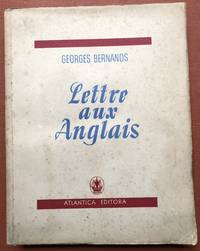
Lettre Aux Anglais - One of 32 signed copies (1942) Anti-Hitler Anti-Nazi
Bernanos, Georges
- Publisher: Atlantica Editora
- Date published: 1942
Rio de Janeiro: Atlantica Editora, 1942. First printing. Wraps. Good. No. 8 of 32 numbered copies SIGNED BY BERNANOS, small quarto, good plus copy with quite a bit of foxing to covers and endpapers, preliminary pages and last several pages, text otherwise very good and partly unopened and uncut. Light corner creasing to covers. Bernanos settled in Brazil in 1938 due to rising tensions in Europe. He critiqued the French during WWII for their defeatist attitude, and this book also addresses how countries should respond to Hitler, offering lessons that could easily be applied these days as we witness the rise of authoritarianism across the planet. Bernanos was a French soldier in WWI, a devout Catholic, and a well regarded novelist, best known these days for his âDiary of a Country Priestâ (1936). He died in 1948.
commoncrowbooks-450.00-0d398d995e43aea90f3280fa918dfa75
1919 to 1922 Original Handwritten Diary of an American Wwi Soldier Returning Home to a Country in Upheaval Amid Fears of Communist Revolution
1919 to 1922 Original Handwritten Diary of an American Wwi Soldier Returning Home to a Country in Upheaval Amid Fears of Communist Revolution
Unknown
- Date published: 1919
- Format: Manuscript
On offer is a fascinating record of an American army officer in France immediately following the end of World War One. The author of this notebook is uncertain. Context does suggest that he is American, as his travels eventually take him to Pontanezen Camp--a huge American base in northwestern France from where American troops were repatriated to the United States. The journal begins with a reference to the nascent League of Nations on page 2: "Great General Council and minor councils, decrees of former, binding and enforced by armies of combined states (only 15 powers)." The next page bears the first date: February 9, 1919. In this entry, the author details a train trip from Rouen across northern Europe to Vimy Ridge, where he visited military graveyards. He specifically references the 5th, 7th, 14th, 15th, and 16th Canadian Battalions. Vimy Ridge is Canada's most celebrated military victory in WWI. As the author of this diary travels across the countryside, he remarks on enemy troops: "About 4 boxcars on end for German prisoners" (February 11, 1919). He also comments on museums he visited, hotels he stayed at, and the many things he sees as he crosses the country. He enjoys films where he can and operas as well. Throughout March, he details life in and around Pontanezen Camp, and on March 30 he ships out, arriving back in the United States at Boston Harbor on April 7. On May 1, after a wandering train trip, he arrives home in Oberlin, Ohio. Along the way, his notes are full of descriptions of what he sees. Of interest is his reference to the so-called "Red Scare" that was sweeping the United States at the time. The Red Scare was a period in the post-WWI United States marked by perceived fear of radical far-left extremists and communist revolution. This contributed to the wave of white supremacist terrorism and race riots that swept across the United States in early to mid 1919. Hundreds of thousands of returning veterans were dumped into a non-existent labour market amid rising fears of Bolshevism. Our author writes: "At public square hundreds and thousands of reds..." (May 1, 1919). On June 2 he registered for college, with context suggesting Temple University in Philadelphia. The balance of the journal is a detailed description of the author's academic and social life, with a heavy emphasis on the latter. His journal ends on June 22, 1922. Measuring 4.25 inches by 6.75 inches, this small notebook resembles the type of field message notebook that officers carried. The pages are marked in a light grid pattern. There are 94 pages and the notebook is 95 percent complete. The covers are missing, but the stapled binding is in good condition. The pages are in good condition and the handwriting is legible. The entries do not follow a strict daily entry system, as the author skips days from time to time. For a military historian, the author's travels across war-torn France and Belgium provide wonderful detail about the conditions in the months immediately following the war. For a social historian, his observations as he travels in Europe and across eastern United States offer an excellent window into this time of tremendous social upheaval in post-WWI America. Keywords: league of nations; pontanezen camp; vimy ridge; red scare; first red scare; red summer; post-wwi france; post-wwi america; americana; handwritten; manuscript; document; letter; autograph; writer; hand written; documents; signed; letters; manuscripts; diary; diaries; journals; personal history; social history; historical; holograph; writers; autographs; personal; memoir; memorial; antiquité, contrat; vélin; document; manuscrit; papier antike; brief; pergament; dokument; manuskript; papier oggetto d'antiquariato; atto; velina; documento; manoscritto; carta antigüedad; hecho; vitela; documento; manuscrito; papel.
katzfinemanuscripts-492.99-bcba7b098ebb1f6df6d41484da1f590d
1919 Diary of American Soldier from the 56th Infantry, Ezra Skow, Stationed in Occupied Germany following WWI, Describing the Duties and Daily Life of a US Soldier
1919 Diary of American Soldier from the 56th Infantry, Ezra Skow, Stationed in Occupied Germany following WWI, Describing the Duties and Daily Life of a US Soldier
Ezra Skow, Co. I, 56th Regiment Infantry
- Publisher: Occupied Germany, Coblenz, Benton, PA, 56th Infantry
- Date published: 1919
Coblenz, Germany, Benton, Pa,: Occupied Germany, Coblenz, Benton, PA, 56th Infantry. Good. 1919. Softcover. On offer is a superb pocket notebook kept by an American soldier in occupied Germany in the months immediately following World War One (WW1). The author of this notebook is Ezra Skow. Little is known of Skow's early life. He was born in 1892 and enlisted in the U. S. Army in about September, 1918 at the age of 25 or 26. Burial records in Benton PA indicate that he was attached to the 156th Infantry Regiment. However, there was no 156th Infantry in the United States Order of Battle in WWI. In his notebook, Skow records that he served in the 56th Infantry. This accords with the record of service of the 56th Infantry Regiment. The 56th Infantry Regiment was a regular infantry regiment in the United States Army. Its roots date back to the American Civil War where it served in the North's Army of the Potomac. It originated from personnel of the 17th Infantry Regiment in 1917 and fought in the region of Metz during World War I. In April 1919 a battalion of the 56th entered Metz as an honour guard for the Commanding General of the American Expeditionary Force, John J. Pershing. Skow was married before joining the army. His wife, Laura, lived until 1987, passing away at the age of 93. Skow himself died in 1947 at the age of 57. His entries take the form of letters to his wife. They cover the period Jan 11, 1919 through June 25 1919. In his diary, Skow records several of the towns and cities in which his unit was stationed including Metz, France, Mulheim, Metternich and other places in and around the city of Coblenz, Germany. His entries speak about the day-to-day existence of a private soldier: "This is some place. Gee, I wish I was home now. I would tell you a lot. The women are carrying their things on their back when they go to the store" [Jan 13]; "... I wrote you a letter tonight and send you the worlds clock too as I saw that today over at the city. And I was to see Charley Chaplin in the front line trenches and it was good. I would like to see you now. ... I sit here at a Dutch table now writing notes and the Dutch man is reading the paper and his wife is talking out of the front window and you can see they are like [ ] but not quite as bad. Your Husband Ezra Skow xxxx" [May 2]; "... I was over to Coblenz today and wrote you a letter. And it is a fine day. I didn't do very much today. But believe me I would love to be home to loved you again. As I am getting tired of this life and will be able to tell you all about it when I get home ... Your most [ ] lonely husband this side of the water. Ezra Skow" [May 12]. On June 4th, he writes that he has learned his unit is going to be leaving the Coblenz area and hopefully heading home to the United States. In fact, this is exactly what happened. By June 23rd, he is in Fort Dix NJ and on the 25th, he is out of the army. : "... I am out of the army now. Coming home to you dear..." [June 25]. There are several other pages of note which include, among other things, the names and addresses of several other men - likely men he met and befriended. For a historian, this is an outstanding piece of primary source material. It details the very ordinary day-to-day life of a soldier in WWI, capturing his duties and his longing for home. For a regimental historian, this fills in details of the history of their regiments. For a genealogist, it offers some links to other Americans who served in that regiment. Measuring 5.25 inches by 3.5 inches, this notebook contains 72 pages and is 85% complete. The book is in good condition. The binding and pages are intact. His handwriting is cramped but generally legible. ; Manuscripts; 24mo 5" - 6" tall; 72 pages; Keywords: handwritten, manuscript, document, letter, autograph, writer, hand written, documents, signed, letters, manuscripts, historical, holograph, writers, autographs, personal, memoir, memorial, antiquité, contrat, vélin, document, manuscrit, papier antike, brief, pergament, dokument, manuskript, papier oggetto d'antiquariato, atto, velina, documento, manoscritto, carta antigüedad, hecho, vitela, documento, manuscrito, papel, 56th Infantry, World War One, US Army, American soldier, Occupied Germany .
katzfinemanuscripts-510.99-d10701ae49d51d895c42c7194eff8557
History of the U.S.S. Mount Vernon, A - Compiled from the ship's official diary (WITH HANDWRITTEN ACCOUNT BY SHIP'S CHAPLAIN)
History of the U.S.S. Mount Vernon, A - Compiled from the ship's official diary (WITH HANDWRITTEN ACCOUNT BY SHIP'S CHAPLAIN)
Doyle, Lieutenant Com. James Madison
- Publisher: Brooklyn Daily Eagle
- Date published: 1919
Brooklyn, NY: Brooklyn Daily Eagle , 1919. 1st. Hardcover. Very Good/None . SIGNED. Hardcover, 211 pages. dark blue cloth stamped in gilt. SIGNED TWICE BY THE SHIP'S CHAPLAIN, W. A. H0PKINS, once on the front fly leaf, along with his title and name of ship and again on Honor Roll page. Contains a 20 page handwritten account written in pencil of the ship's torpedoing by the ship's Chaplain (his Copy). Pages folded and laid in. Unique. Record # 303328
monroestreetbooks-512.00-fcc6bb5b1f9e3f45ac7c11119f3ae7f6
1919 Diary of American Soldier From the 56th Infantry, Ezra Skow, Stationed in Occupied Germany Following Wwi, Describing the Duties and Daily Life of a Us Soldier
1919 Diary of American Soldier From the 56th Infantry, Ezra Skow, Stationed in Occupied Germany Following Wwi, Describing the Duties and Daily Life of a Us Soldier
Ezra Skow, Co. I, 56th Regiment Infantry
- Publisher: Occupied Germany, Coblenz, Benton, PA, 56th Infantry
- Date published: 1919
- Format: Softcover
On offer is a superb pocket notebook kept by an American soldier in occupied Germany in the months immediately following World War One (WW1). The author of this notebook is Ezra Skow. Little is known of Skow's early life. He was born in 1892 and enlisted in the U. S. Army in about September, 1918 at the age of 25 or 26. Burial records in Benton PA indicate that he was attached to the 156th Infantry Regiment. However, there was no 156th Infantry in the United States Order of Battle in WWI. In his notebook, Skow records that he served in the 56th Infantry. This accords with the record of service of the 56th Infantry Regiment. The 56th Infantry Regiment was a regular infantry regiment in the United States Army. Its roots date back to the American Civil War where it served in the North's Army of the Potomac. It originated from personnel of the 17th Infantry Regiment in 1917 and fought in the region of Metz during World War I. In April 1919 a battalion of the 56th entered Metz as an honour guard for the Commanding General of the American Expeditionary Force, John J. Pershing. Skow was married before joining the army. His wife, Laura, lived until 1987, passing away at the age of 93. Skow himself died in 1947 at the age of 57. His entries take the form of letters to his wife. They cover the period Jan 11, 1919 through June 25 1919. In his diary, Skow records several of the towns and cities in which his unit was stationed including Metz, France, Mulheim, Metternich and other places in and around the city of Coblenz, Germany. His entries speak about the day-to-day existence of a private soldier: "This is some place. Gee, I wish I was home now. I would tell you a lot. The women are carrying their things on their back when they go to the store" [Jan 13]; "...I wrote you a letter tonight and send you the worlds clock too as I saw that today over at the city. And I was to see Charley Chaplin in the front line trenches and it was good. I would like to see you now....I sit here at a Dutch table now writing notes and the Dutch man is reading the paper and his wife is talking out of the front window and you can see they are like [ ] but not quite as bad. Your Husband Ezra Skow xxxx" [May 2]; "...I was over to Coblenz today and wrote you a letter. And it is a fine day. I didn't do very much today. But believe me I would love to be home to loved you again. As I am getting tired of this life and will be able to tell you all about it when I get home...Your most [ ] lonely husband this side of the water. Ezra Skow" [May 12]. On June 4th, he writes that he has learned his unit is going to be leaving the Coblenz area and hopefully heading home to the United States. In fact, this is exactly what happened. By June 23rd, he is in Fort Dix NJ and on the 25th, he is out of the army. : "...I am out of the army now. Coming home to you dear..." [June 25]. There are several other pages of note which include, among other things, the names and addresses of several other men-likely men he met and befriended. For a historian, this is an outstanding piece of primary source material. It details the very ordinary day-to-day life of a soldier in WWI, capturing his duties and his longing for home. For a regimental historian, this fills in details of the history of their regiments. For a genealogist, it offers some links to other Americans who served in that regiment. Measuring 5.25 inches by 3.5 inches, this notebook contains 72 pages and is 85% complete. The book is in good condition. The binding and pages are intact. His handwriting is cramped but generally legible.; Manuscripts; 24mo 5"-6" tall; 72 pages; Keywords: handwritten, manuscript, document, letter, autograph, writer, hand written, documents, signed, letters, manuscripts, historical, holograph, writers, autographs, personal, memoir, memorial, antiquité, contrat, vélin, document, manuscrit, papier antike, brief, pergament, dokument, manuskript, papier oggetto d'antiquariato,...
katzfinemanuscripts-513.99-d10701ae49d51d895c42c7194eff8557
1907-1908 Diary of a Young Ohio Woman about to Marry Her First Husband
1907-1908 Diary of a Young Ohio Woman about to Marry Her First Husband
Lois Vereen Leslie
- Date published: 1907
Ohio. Fair with no dust jacket. 1907. Softcover. On offer is an interesting diary kept by a young mid-western American woman during the last years of WWI, in the months leading up to her first marriage. The author of this diary was Lois Vereen Leslie (1889-1986) of Ohio. She was married to William Andrew Scott (1889-1952) in 1908. They had a child named Charlotte Loraine Scott in 1910. Lois subsequently moved to California and married Roy Henry Nelson (1888-1976) in 1938. They remained married to him until his death. She passed away in California. Leslie kept this diary from October 1907 until June 1908, when she was 18 turning 19. She makes a note at the end of the diary, “I was married July 29, 1908”. Her entries are often only 3 or 4 lines. They recount daily events in her life including plenty of talk about Bill, who she would marry very soon. The following will give a sense of her diary: “Etta and I went driving in the A. M. Hazel & Lillian came down in afternoon and we went uptown in eve. Bill came home with us” [Oct 2]. “Baked chocolate pie in A. M. Ida and [ ] came in afternoon and we went skating. I received letter from Laura Hitchcock in afternoon. [ ] and I were at [ ]’s store with Clara and Eva” [Jan 23]. “Bill’s sister Jean and his Aunt Daisie came over in afternoon. Papa and wife came in evening from Chicago in No 8 to Van Wert, then to Convoy in 9: 42 car. I stayed all night with Dora Leslie” [May 9]. For a social historian, this little diary gives a glimpse into the life of a very ordinary American woman on the verge of becoming a wife and mother, in the early years of the 20th century. For a Women’s Studies program, it offers a look at the roles and expectations of women at that time and place. This small diary measures approximately 5x2.5 inches and contains 148 pages. It is about 55% complete. The book is not a diary per se but rather a small pocket notebook containing pages printed with a light grid on each page. The pages are not dated. The covers are intact and have separated from the book itself.. There is evidence of wear – the front cover has had some of the surface of the cover worn off and there are wear marks along the spine, and at the corners. The pages are sewn and are in good condition. The handwriting is reasonably legible although the first few pages are very faint.; Manuscripts; 24mo 5" - 6" tall; 148 pages; Signed by Author .
katzfinemanuscripts-565.99-14e8789a2cc97c8405fa58f3c32e2963
1918 ORIGINAL MANUAL, SCRAPBOOK AND EARLY AVIATION MECHANIC'S TECHNICAL JOURNAL DURING WORLD WAR I
1918 ORIGINAL MANUAL, SCRAPBOOK AND EARLY AVIATION MECHANIC'S TECHNICAL JOURNAL DURING WORLD WAR I
PVT. FRANKLIN T. RHODES
- Date published: 1918
ARIZONA NEBRASKA USA. Fair. 1918. On offer is an original collection and historical relic of WWI aviation being a journal of technical notes, diary entries, sketches and un-mailed letters handwritten and compiled by to Pvt. Franklin T. Rhodes, an aircraft mechanic in the US 86th Aero Squadron during WWI. Several pages are devoted to the A.E.G. Bomber G.105 including sketches, performance statistics and dimensions. There is also a page mentioning the Curtis trainer (J4 Jenny?). Several of the pages have 1918 dates at the top and include diary entries expressing his views of the "Great War". He also gives accounts of sightseeing in France with his buddies and several pages of letters that were never mailed. The first several pages appear to have been a collection of pre-WWI family photos that he kept in his binder/ note book. The photos have all been removed prior to acquisition, but the captions are still there. Twenty four [24] pages of writings in total. Overall Fair.; 4to - over 9¾" - 12" tall; KEYWORDS: HISTORY OF, FRANKLIN T. RHODES, WORLD WAR I, WWI, WW1, THE GREAT WAR, AVIATION, AVIONICS, AVIATORS, ENGINEERING, AIRPLANES, A.E.G. BOMBER, US 86TH AERO SQUADRON, HANDWRITTEN, MANUSCRIPT, DOCUMENT, LETTER, AUTOGRAPH, DIARY, JOURNAL, LOG, KEEPSAKE, WRITER, HAND WRITTEN, DOCUMENTS, SIGNED, LETTERS, MANUSCRIPTS, PHOTO ALBUM, PHOTOGRAPHIC ALBUM, HISTORICAL, HOLOGRAPH, WRITERS, HANDSCHRIFT, HANDGESCHRIEBEN, MANUSKRIPT, SÜTTERLIN, VON HAND GESCHRIEBEN, HANDSCHRIFTLICH, UNIKAT, EINZELSTÜCK, DOKUMENT, SCHRIFTSTÜCK, KURRENT, KURRENTSCHRIFT, DEUTSCHE SCHREIBSCHRIFT, OSTPREUßEN, KALININGRAD, ADEL, DIARIES, JOURNALS, LOGS, AUTOGRAPHS, PERSONAL, MEMOIR, MEMORIAL, PERSONAL HISTORY, antiquité, contrat, vélin, document, manuscrit, papier Antike, Brief, Pergament, Dokument, Manuskript, Papier oggetto d'antiquariato, atto, velina, documento, manoscritto, carta antigüedad, hecho, vitela, documento, manuscrito, Papel, .
katzfinemanuscripts-585.99-9ad654bafea3207925099bfa067c559d
1916 ORIGINAL MANUSCRIPT SCHOOL MEMORIES JOURNAL - AN HOMAGE TO HIGH SCHOOL LIFE AND CHARMING RELIC OF PRE WORLD WAR I AMERICANA
1916 ORIGINAL MANUSCRIPT SCHOOL MEMORIES JOURNAL - AN HOMAGE TO HIGH SCHOOL LIFE AND CHARMING RELIC OF PRE WORLD WAR I AMERICANA
MISS HELEN GERTRUDE SCHAFFTER
- Date published: 1916
ORRVILLE BAUGHMAN TOWNSHIP WAYNE COUNTY OHIO OH. Good+. 1916. On offer is an original and unusual manuscript diary handwritten by Helen Schaffter who lived in Orrville, Baughman Township, Wayne County, Ohio. In this charming book, she kept memories of her school commencement, notes her class colors, class yell, motto, flowers, song, class officers, school faculty, amusements, autographs, sayings, poems, jokes, stunts and frolics, etc. She lists the commencement gifts that she received which include a ruby ring, gold jewel case, silk parasol, silk boudoir cap, ebony mirror, and more. Helen does a great job over 79 pages in this 6" x 9 1/4" book naming her friends and detailing their travels and otherwise painting a picture of life just before America entered the First World War. Adding depth to the narrative Helen has littered the book with ephemera: mementos, photos, her calling card and a Valentine cupid cut-outs, etc. There are a number of wonderful photographs of her too. Research suggests that Helen's parents were Paul A. Schaffter and Lucilla V. Schaffter and they were born in Switzerland. Her father was 51 years old, and her mother was 49 years old when she was born! She had an older sister named Ida. ; Manuscript; 4to - over 9¾" - 12" tall; PRE WORLD WAR I, WWI, WW ONE, WAYNE COUNTY, ORRVILLE, OHIO, Women's Studies, Gender Studies, Homefront, Hand Written, Personal, Americana, Memoir, Handwritten, autograph, autographs, signed, letters, document, documents, manuscript, manuscripts, writers, writer, author, Holograph, personal, Ephemera, antiquité, contrat, vélin, document, manuscrit, papier Antike, Brief, Pergament, Dokument, Manuskript, Papier oggetto d'antiquariato, atto, velina, documento, manoscritto, carta antigüedad, hecho, vitela, documento, manuscrito, .
katzfinemanuscripts-585.99-fac0f74f3bf26778f79bba312582aac6
Photographic print. OUTSTANDING SIGNED PORTRAIT OF THE FOUNDER OF SOE
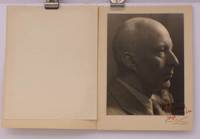
Photographic print. OUTSTANDING SIGNED PORTRAIT OF THE FOUNDER OF SOE
DALTON] [Hugh
n.d. [?1930s]. measuring 8.5 x 6.25 ins. (approx. 21.5 x 16.0 cms) printed in sepia and mounted in studio's presentation gatefold wallet with original tissue guard intact; in near fine state. SIGNED BY DALTON WITH HIS HOLOGRAPH INSCRIPTION AND SIGNATURE ACROSS LOWER RIGHT-HAND CORNER OF PORTRAIT AND MOUNT. The portrait was taken in the studio of Andrew Paterson of Inverness. Paterson was a highly successful artist-photographer whose services were sought over several decades by many leading political and commercial figures of the day. The Rt. Hon. Edward Hugh John Neale Dalton, later Baron Dalton (1887-1962), Labour politician and close friend of Winston Churchill, occupied several senior offices of state throughout his long career. During WWII he served as Minister of Economic Warfare and President of the Board of Trade, from 1945-47 as Chancellor of the Exchequer (when he nationalised the Bank of England), and from 1948-50 as Chancellor of the Duchy of Lancaster. Dalton was born in Wales and educated at Eton, King's College Cambridge, the London School of Economics (LSE) and the University of London. During WWI he served as a lieutenant in France and Italy, compiling 'With British Guns in Italy' as a record of his experiences. Although a staunch Labour party member he was nevertheless a fervent supporter of Churchill during the crisis of 1940 and strongly opposed to any compromise peace as urged by Halifax and other conservatives. In his wartime coalition Churchill appointed Dalton Minister of Economic Warfare. Following Churchill's well-known instruction 'to set Europe ablaze' Dalton founded the Special Operations Executive (SOE) and was subsequently a co-founder of the Political Warfare Executive (PWE). After the surprise Labour victory in 1945 Dalton was seen (alongside Attlee, Bevin, Morrison and Cripps) as one of the 'big five' of the new administration. In 1948 he was appointed Chancellor of the Duchy of Lancaster and in 1950 Minister of Town and Country Planning. He retired from government after the general election of 1951 and was created a life peer as Baron Dalton on 1960. Items signed by Dalton are now very rare. His papers and diaries are held at the London School of Economics. A SCARCE AND SPLENDID SIGNED PORTRAIT IDEAL FOR PRESENTATION
islandbooks-621.55-48b7ddf79bf296b91a77c8793e2c89aa
1876-1879 HANDWRITTEN MANUSCRIPT DIARY DETAILING THE PRESIDENTIAL POLITICS OF THE DAY - THE CONTESTED RUTHERFORD HAYES SAMUEL TILDEN ELECTION
1876-1879 HANDWRITTEN MANUSCRIPT DIARY DETAILING THE PRESIDENTIAL POLITICS OF THE DAY - THE CONTESTED RUTHERFORD HAYES SAMUEL TILDEN ELECTION
James William E. Spooner
- Date published: 1876
Boston, New Bedford, Roxbury MASS. Very Good. 1876. On offer is the 1876 handwritten manuscript diary of 'Jas William E Spooner' as evidenced by his writing on the front endpaper. This book will be of particular interest to historians of the Boston/New Bedford where Mr. Spooner resided and presidential history. The diary begins October 1876 through April 1879. While he does write of personal and business matters the political history in the book are from Mr. Spooner's many entries regarding the contested presidential election of 1876 between Samuel Tilden and Rutherford Hayes. Here are some brief highlights: October 24 entry describes the Grant torch light procession of the Republicans through Boston. October 27th entry describes the "Carpet baggers and the horribles which looked very comical...Flag Raising on Ruggles St, Democrats" October 30th describes the Democratic torchlight Procession down through Faneuil Hall. November 3rd's lengthy entry describes the author's travels and the election results - "one night now after the political campaign is over, it is hard to determine who shall be the President there being trouble is a few of the southern states fraud claimed by both the Republican and Decmorat Partys. Grant had sent troops south and men of both partys have gone down to have a fair count of the voted but not terms of settlement have been arrived at yet the men that are running for President are Samuel Tilden Governor of New York and Ruther B Hayes, Governor and Ohio and Wheeler Vice President. Both Republicans Tilden and Hendrick are elected according as the vote stands separate from a few of the southern states whether war will terminate this election remains to be found and both partys claim the victory today" Dec 11 entry, "The political question remains still unsettled, both candidates are claimed to have been elected" Other entries include commentary on the weather, travels throughout the Boston area and down to Fairhaven / New Bedford; some boats in the New Bedford area are mentioned, as is the Howland name. Mr. Spooner also uses the book to copy a letter he has written to his friends. Cash and financial details are noted. 8vo. Leather spine, corners, worn boards, approx. 37 pp. of text. ; Manuscript; 12mo - over 6¾" - 7¾" tall; HANDWRITTEN, MANUSCRIPT, DOCUMENT, LETTER, AUTOGRAPH, DIARY, JOURNAL, LOG, KEEPSAKE, WRITER, HAND WRITTEN, DOCUMENTS, SIGNED, LETTERS, MANUSCRIPTS, HISTORICAL, HOLOGRAPH, WRITERS, DIARIES, JOURNALS, LOGS, AUTOGRAPHS, PERSONAL, MEMOIR, MEMORIAL, PERSONAL HISTORY, AMERICANA, GENEALOGY, NAVY, POST WWI, WORLD WAR I, WORLD WAR ONE, THE WAR TO END ALL WARS, THE GREAT WAR antiquité, contrat, vélin, document, manuscrit, papier Antike, Brief, Pergament, Dokument, Manuskript, Papier oggetto d'antiquariato, atto, velina, documento, manoscritto, carta antigüedad, hecho, vitela, documento, manuscrito, SHIP BUILDING, ENGINEERING, MECHANICS, KEMP, ALL-AMERICAN, .
katzfinemanuscripts-625.99-76f173916c6bf12e39ab9fc5fd54bb80
Original Handwritten Pair of 1922 Travel Diaries Granting a Remarkable Look Into the Post-WWI World of Art and Upper-Class Travel in Europe
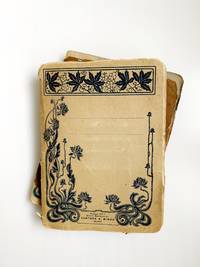
Original Handwritten Pair of 1922 Travel Diaries Granting a Remarkable Look Into the Post-WWI World of Art and Upper-Class Travel in Europe
Unknown
- Date published: 1922
On offer are two heavily illustrated travel diaries dating only a few years after World War I. The 1922 notebooks detail (in word and illustration) a trip through Italy and France. The writer is unknown, but context suggests he is a well-educated Englishman with a good knowledge of the arts. The books consist of descriptions of the many places visited by the author and the artistic pieces he saw. These include for the most part paintings and sculptures. "It was a lovely day so we decided to go to Padua. It was very cold going over in the boat but we found a sheltered nook. It was very interesting going along the Brenta with its 17th and 18th century villas . . . And at Stra the magnificent palaces instead of villas of the Pissani. An enormous estate with many gates in it through which one could catch vistas of beautiful trees and small houses . . . Marie was disappointed in the Giotti frescos--they have been so painted over" (April 24). (A century earlier, the Pissani family had to sell their estate to Napoleon as a result of huge gambling losses. ) "Saw Cristoforo Martiri Late Gothic Facade . . . Inside has a curios painted ceiling and in one chapel, that of the Contarini, is Tintorettos Presenta [ ]. One of his more pleasing things. In the door is his Last Judgment and the Worship of the Golden Calf" (April 26). At the end of April, the author leaves Italy for Paris. Most of the entries, like those quoted above, provide detailed descriptions of various places the diarist visits. What brings the narrative to life are the dozens of cards and photographs affixed to many of the pages. Some are postcards, while others appear to be streetscapes that were cut out from contemporary magazines. Still others are photographs, most in black and white. The author is clearly an individual of some wealth and certainly taste. What is remarkable is that this journey takes place approximately three years following the end of the incredibly destructive WWI. In fact, the war is never really mentioned, yet its scars would have been in plain view to the author.The two notebooks each measure 8 inches by 6 inches. They both contain 80 pages and are 100% complete. The diaries show the wear of nearly a century. The covers are intact, as are the pages, but there is wear on the corners and chipping on pages throughout. The handwriting is quite legible. Historians will find value in the rich detail of these notebooks. The photographs of street scenes bring this long-gone world to life. The contrast of the general destruction of the war years and some of the most magnificent art works of Western civilization is striking. These diaries are truly a remarkable look into the post-war world of art and upper-class travel in Europe. KEYWORDS: EUROPEAN ART; POST-WWI EUROPE; GREAT MUSEUMS OF EUROPE; VENICE; PARIS; ITALY; POST-WAR PARIS; FRANCE AFTER WWI; World War I; HANDWRITTEN; MANUSCRIPT; DOCUMENT; LETTER; AUTOGRAPH; WRITER; HAND WRITTEN; DOCUMENTS; SIGNED; LETTERS; MANUSCRIPTS; DIARY; DIARIES; JOURNALS; PERSONAL HISTORY; SOCIAL HISTORY; HISTORICAL; HOLOGRAPH; WRITERS; AUTOGRAPHS; PERSONAL; MEMOIR; MEMORIAL; ANTIQUITÃ, CONTRAT; VÃLIN; DOCUMENT; MANUSCRIT; PAPIER ANTIKE; BRIEF; PERGAMENT; DOKUMENT; MANUSKRIPT; PAPIER OGGETTO D'ANTIQUARIATO; ATTO; VELINA; DOCUMENTO; MANOSCRITTO; CARTA ANTIGÃEDAD; HECHO; VITELA; DOCUMENTO; MANUSCRITO; PAPEL .
katzfinemanuscripts-629.99-94a1286e03a000405abe029237410f60
1918 NEW YEAR'S EVE AUTOGRAPH LETTER SIGNED [ALS] HANDWRITTEN BY A CANADIAN SOLDIER VETERAN OF VIMY RIDGE AND PASSCHENDAELE ON BLIGHTY LEAVE COMPLAINING TO HIS GIRLFRIEND OF THE HIGH AND MIGHTY 'YANKS' AND MORE
1918 NEW YEAR'S EVE AUTOGRAPH LETTER SIGNED [ALS] HANDWRITTEN BY A CANADIAN SOLDIER VETERAN OF VIMY RIDGE AND PASSCHENDAELE ON BLIGHTY LEAVE COMPLAINING TO HIS GIRLFRIEND OF THE HIGH AND MIGHTY 'YANKS' AND MORE
KARL GEORGE LEES
- Date published: 1918
LONDON, ENGLAND. Very Good. 1918. On offer is a super, original manuscript relic of World War I, being an autograph letter handwritten by Karl George Lees a Canadian soldier [L/Cpl 769012] while he was on "Blighty leave", in England, New Year's Eve 1918. There is some very interesting content in this letter, including some strong criticism of the American contingent: the "Yanks." Lees arrived in France in March 1917 with the 124th Canadian Infantry Battalion (Pioneer); The Governor General's Body Guard. He served at the Western Front in March 1918 in the 124th until that battalion was absorbed into the Canadian Engineers on 25th May 1918. He spent the remainder of the war in France and Belgium. He was present at the victories at Vimy Ridge, Passchendaele, and others, including the "Hundred Days" in 1918. This letter is addressed to his girlfriend, Miss L[ucy] Routledge of Oak Ridges, Ontario, who was a student nurse at the Hospital for Sick Children in Toronto. Originally from England Lees was spending his leave at the home of his family in London. His brother had been killed in action shortly before the armistice, leaving behind a widow and two young children. This five [5] page letter perfectly exemplifies the attitude that Karl had become, like many Canadian, British, French, and other allied soldiers, perturbed by the perception that the American army had been the decisive element in achieving final victory. In this letter he writes: "We got to London about 14:30 and were in time to see a naval squad coming from Buckingham Palace way with fixed bayonets, and on making enquiries found out that President Wilson was visiting and passing through Trafalgar Square. We got over to the Square as soon as possible but were too late, but the crowds were enormous and the Strand was decorated up, mainly with 'Old Glory'. It gets my nanny to see and hear nothing but 'the Yanks' and 'the States.' Why, when I was in Brussels they showed on the screen at one of the theatres the King of the Belgians, naturally they clapped. Then King George and there was hardly a stir, and then Wilson was put up and the house nearly went crazy, made even more ovation than for King Albert. Why, I could hardly have expected more if my portrait had been shown. The Yanks certainly think it pays to advertise." Aside from this, this entire letter is about his journey through Belgium to the Channel and then to England. He writes in some detail about his frantic attempt to reach London by Christmas. He departed from his unit on December 23rd, rode to Gembloux by saddle horse, took a train to Namur, then Mons to Boulogne, grabbing rations whenever the opportunity arose: "They had a great way, too, of serving out the meals on the way down. Just before we reached Mons we were told that if an N.C.O. sent to the car a chit stating number of car and the number of men it contained we could draw breakfast. So I made it out, and naturally added four more to the list, and next morning I thought that we'd be getting breakfast about 8:00, but we finally got it at 11:30... We got the old reliable, five to a tin of McConichie, five to a loaf, and go easy with the tea." There is more along these lines, followed by his trip across the Channel to Folkestone, and then to London in a First Class coach. This is quite an interesting letter. Overall VG.; Autograph Letter Signed [ALS]; 12mo - over 6¾" - 7¾" tall; WORLD WAR I, WWI, THE GREAT WAR, VIMY RIDGE, YANKS, ANTI AMERICANISM, PASSCHENDAELE, LEES, OAK RIDGES, ROUTLEDGE, CANADIANA. BLIGHTY, HANDWRITTEN, MANUSCRIPT, DOCUMENT, LETTER, AUTOGRAPH, DIARY, JOURNAL, LOG, KEEPSAKE, WRITER, HAND WRITTEN, DOCUMENTS, SIGNED, LETTERS, MANUSCRIPTS, HISTORICAL, HOLOGRAPH, WRITERS, DIARIES, JOURNALS, LOGS, AUTOGRAPHS, PERSONAL, MEMOIR, MEMORIAL, PERSONAL HISTORY, BRITAIN, BRITISH, BRITISH EMPIRE, RAF, World War I, WW I, TRAVEL, GERMANY, ANTIQUITÉ, CONTRAT, VÉLIN, MANUSCRIT, PAPIER ANTIKE, BRIEF, PERGAMENT, DOKUMENT, BELGIUM, GERMANY, FRANCE, WESTERN FRONT, EUROPEAN THEATRE, .
katzfinemanuscripts-685.99-6e2a6c0a2a3f070f21d2ce8b881c7619
1919 to 1922 Original Handwritten Diary of an American Wwi Soldier Returning Home to a Country in Upheaval Amid Fears of Communist Revolution
1919 to 1922 Original Handwritten Diary of an American Wwi Soldier Returning Home to a Country in Upheaval Amid Fears of Communist Revolution
Unknown
- Date published: 1919
- Format: Manuscript
On offer is a fascinating record of an American army officer in France immediately following the end of World War One. The author of this notebook is uncertain. Context does suggest that he is American, as his travels eventually take him to Pontanezen Camp--a huge American base in northwestern France from where American troops were repatriated to the United States. The journal begins with a reference to the nascent League of Nations on page 2: "Great General Council and minor councils, decrees of former, binding and enforced by armies of combined states (only 15 powers)." The next page bears the first date: February 9, 1919. In this entry, the author details a train trip from Rouen across northern Europe to Vimy Ridge, where he visited military graveyards. He specifically references the 5th, 7th, 14th, 15th, and 16th Canadian Battalions. Vimy Ridge is Canada's most celebrated military victory in WWI. As the author of this diary travels across the countryside, he remarks on enemy troops: "About 4 boxcars on end for German prisoners" (February 11, 1919). He also comments on museums he visited, hotels he stayed at, and the many things he sees as he crosses the country. He enjoys films where he can and operas as well. Throughout March, he details life in and around Pontanezen Camp, and on March 30 he ships out, arriving back in the United States at Boston Harbor on April 7. On May 1, after a wandering train trip, he arrives home in Oberlin, Ohio. Along the way, his notes are full of descriptions of what he sees. Of interest is his reference to the so-called "Red Scare" that was sweeping the United States at the time. The Red Scare was a period in the post-WWI United States marked by perceived fear of radical far-left extremists and communist revolution. This contributed to the wave of white supremacist terrorism and race riots that swept across the United States in early to mid 1919. Hundreds of thousands of returning veterans were dumped into a non-existent labour market amid rising fears of Bolshevism. Our author writes: "At public square hundreds and thousands of reds..." (May 1, 1919). On June 2 he registered for college, with context suggesting Temple University in Philadelphia. The balance of the journal is a detailed description of the author's academic and social life, with a heavy emphasis on the latter. His journal ends on June 22, 1922. Measuring 4.25 inches by 6.75 inches, this small notebook resembles the type of field message notebook that officers carried. The pages are marked in a light grid pattern. There are 94 pages and the notebook is 95 percent complete. The covers are missing, but the stapled binding is in good condition. The pages are in good condition and the handwriting is legible. The entries do not follow a strict daily entry system, as the author skips days from time to time. For a military historian, the author's travels across war-torn France and Belgium provide wonderful detail about the conditions in the months immediately following the war. For a social historian, his observations as he travels in Europe and across eastern United States offer an excellent window into this time of tremendous social upheaval in post-WWI America. Keywords: league of nations; pontanezen camp; vimy ridge; red scare; first red scare; red summer; post-wwi france; post-wwi america; americana; handwritten; manuscript; document; letter; autograph; writer; hand written; documents; signed; letters; manuscripts; diary; diaries; journals; personal history; social history; historical; holograph; writers; autographs; personal; memoir; memorial; antiquité, contrat; vélin; document; manuscrit; papier antike; brief; pergament; dokument; manuskript; papier oggetto d'antiquariato; atto; velina; documento; manoscritto; carta antigüedad; hecho; vitela; documento; manuscrito; papel.
katzfinemanuscripts-701.37-bcba7b098ebb1f6df6d41484da1f590d
1919 Diary of American Soldier From the 56th Infantry, Ezra Skow, Stationed in Occupied Germany Following Wwi, Describing the Duties and Daily Life of a Us Soldier
1919 Diary of American Soldier From the 56th Infantry, Ezra Skow, Stationed in Occupied Germany Following Wwi, Describing the Duties and Daily Life of a Us Soldier
Ezra Skow, Co. I, 56th Regiment Infantry
- Publisher: Occupied Germany, Coblenz, Benton, PA, 56th Infantry
- Date published: 1919
- Format: Softcover
On offer is a superb pocket notebook kept by an American soldier in occupied Germany in the months immediately following World War One (WW1). The author of this notebook is Ezra Skow. Little is known of Skow's early life. He was born in 1892 and enlisted in the U. S. Army in about September, 1918 at the age of 25 or 26. Burial records in Benton PA indicate that he was attached to the 156th Infantry Regiment. However, there was no 156th Infantry in the United States Order of Battle in WWI. In his notebook, Skow records that he served in the 56th Infantry. This accords with the record of service of the 56th Infantry Regiment. The 56th Infantry Regiment was a regular infantry regiment in the United States Army. Its roots date back to the American Civil War where it served in the North's Army of the Potomac. It originated from personnel of the 17th Infantry Regiment in 1917 and fought in the region of Metz during World War I. In April 1919 a battalion of the 56th entered Metz as an honour guard for the Commanding General of the American Expeditionary Force, John J. Pershing. Skow was married before joining the army. His wife, Laura, lived until 1987, passing away at the age of 93. Skow himself died in 1947 at the age of 57. His entries take the form of letters to his wife. They cover the period Jan 11, 1919 through June 25 1919. In his diary, Skow records several of the towns and cities in which his unit was stationed including Metz, France, Mulheim, Metternich and other places in and around the city of Coblenz, Germany. His entries speak about the day-to-day existence of a private soldier: "This is some place. Gee, I wish I was home now. I would tell you a lot. The women are carrying their things on their back when they go to the store" [Jan 13]; "...I wrote you a letter tonight and send you the worlds clock too as I saw that today over at the city. And I was to see Charley Chaplin in the front line trenches and it was good. I would like to see you now....I sit here at a Dutch table now writing notes and the Dutch man is reading the paper and his wife is talking out of the front window and you can see they are like [ ] but not quite as bad. Your Husband Ezra Skow xxxx" [May 2]; "...I was over to Coblenz today and wrote you a letter. And it is a fine day. I didn't do very much today. But believe me I would love to be home to loved you again. As I am getting tired of this life and will be able to tell you all about it when I get home...Your most [ ] lonely husband this side of the water. Ezra Skow" [May 12]. On June 4th, he writes that he has learned his unit is going to be leaving the Coblenz area and hopefully heading home to the United States. In fact, this is exactly what happened. By June 23rd, he is in Fort Dix NJ and on the 25th, he is out of the army. : "...I am out of the army now. Coming home to you dear..." [June 25]. There are several other pages of note which include, among other things, the names and addresses of several other men-likely men he met and befriended. For a historian, this is an outstanding piece of primary source material. It details the very ordinary day-to-day life of a soldier in WWI, capturing his duties and his longing for home. For a regimental historian, this fills in details of the history of their regiments. For a genealogist, it offers some links to other Americans who served in that regiment. Measuring 5.25 inches by 3.5 inches, this notebook contains 72 pages and is 85% complete. The book is in good condition. The binding and pages are intact. His handwriting is cramped but generally legible.; Manuscripts; 24mo 5"-6" tall; 72 pages; Keywords: handwritten, manuscript, document, letter, autograph, writer, hand written, documents, signed, letters, manuscripts, historical, holograph, writers, autographs, personal, memoir, memorial, antiquité, contrat, vélin, document, manuscrit, papier antike, brief, pergament, dokument, manuskript, papier oggetto d'antiquariato,...
katzfinemanuscripts-730.88-d10701ae49d51d895c42c7194eff8557
The Greatest of These" A Diary with Portraits of the Patriotic All-Star Tour of "Out There
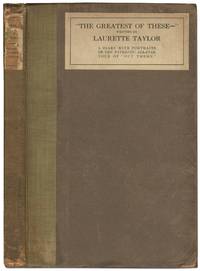
The Greatest of These" A Diary with Portraits of the Patriotic All-Star Tour of "Out There
TAYLOR, Laurette
- Publisher: George H. Doran
- Date published: 1918
New York: George H. Doran, 1918. Hardcover. Good. First edition. Tall octavo. 61pp. Illustrated. Quarter cloth and papercovered boards with printed paper labels. Spine label chipped, front hinge neatly restored, split at the top of the rear top joint, a good only copy. Inscribed by Taylor: "To Malcolm Watson with my compliments, Laurette Taylor 1918." Account of a tour to raise money during WWI by the important stage and silent film actress whose legend and influence far exceed her modern name recognition. Her late career reemergence in Tennessee Williams's *The Glass Menagerie* in 1944 won her the New York Drama Critics Award for Best Actress.
betweenthecoversrarebooksa-750.00-8a8bc56d11f3b4e83cec616aba195cdf
1917 - 1919 ORIGINAL ARCHIVE OF EIGHT [8] LETTERS HANDWRITTEN BY A QUAKER NURSE WHILE ON DUTY AT THE PREMIER AMERICAN MENTAL HOSPITAL
1917 - 1919 ORIGINAL ARCHIVE OF EIGHT [8] LETTERS HANDWRITTEN BY A QUAKER NURSE WHILE ON DUTY AT THE PREMIER AMERICAN MENTAL HOSPITAL
ZELLA GERTRUDE BAYNHAM later MARTIN
- Date published: 1917
Very Good. 1917. On offer is a small, fascinating archive of eight [8] original manuscript letters handwritten by Zella Gertrude Baynham (later Martin) while "on duty" at Friends Hospital in Philadelphia from 1917-1919 to Agnes Maust in Berwick, Pennsylvania. Friends Hospital is recognized as one of the premier mental hospitals in the United States. It was founded by Quakers in 1813. Baynham commenced nursing at Friends Hospital in 1916. The letters are diary like as Zella tells a close friend many important details of her life as a nurse; about her training at Bellevue Hospital in New York City; how she has been "charge nurse of the convalescent ward for 5 weeks; about her courses of study and examinations; much more about her patients and their care; how at one point she had "a private practice"; later describes having an infected finger that "has been cut 5 times in 3 to 4 places...A rose thorn was the cause of it"; also about brief training at Harlem Hospital; how on her first night of "night duty" she was so scared that "every little noise I hear I imagine someone is after me..." Also about romance and gentlemen; about being on duty in the OR and much more. This is really a nice group for historians and researchers of nursing. Overall VG.; 32mo - over 4" - 5" tall; KEYWORDS: HISTORY OF, MENTAL HOSPITAL, QUAKER, QUAKERS, ZELLA GERTRUDE BAYNHAM, AGNES MAUST, FRIENDS HOSPITAL IN PHILADELPHIA, BERWICK, PENNSYLVANIA, NURSING, WORLD WAR I, WWI, WW1, WOMEN'S STUDIES, GENDER STUDIES, SOCIAL STUDIES, NURSES, ZELLA GERTRUDE MARTIN, HANDWRITTEN, MANUSCRIPT, DOCUMENT, LETTER, AUTOGRAPH, DIARY, JOURNAL, LOG, KEEPSAKE, WRITER, HAND WRITTEN, DOCUMENTS, SIGNED, LETTERS, MANUSCRIPTS, PHOTO ALBUM, PHOTOGRAPHIC ALBUM, HISTORICAL, HOLOGRAPH, WRITERS, HANDSCHRIFT, HANDGESCHRIEBEN, MANUSKRIPT, DIARIES, JOURNALS, LOGS, AUTOGRAPHS, PERSONAL, MEMOIR, MEMORIAL, PERSONAL HISTORY, antiquité, contrat, vélin, document, manuscrit, papier Antike, Brief, Pergament, Dokument, Manuskript, Papier oggetto d'antiquariato, atto, velina, documento, manoscritto, carta antigüedad, hecho, vitela, documento, manuscrito, Papel, .
katzfinemanuscripts-755.99-2ad25df1dcb139b84209e6e3bb81890c
1920 HANDWRITTEN MANUSCRIPT DIARY OF A CHARMING EXUBERANT ALL-AMERICAN WORKING AT THE BOSTON SHIPYARDS AND SOON TO BE MARRIED TO HIS LOVE BACK HOME
1920 HANDWRITTEN MANUSCRIPT DIARY OF A CHARMING EXUBERANT ALL-AMERICAN WORKING AT THE BOSTON SHIPYARDS AND SOON TO BE MARRIED TO HIS LOVE BACK HOME
Herbert E. KEMP
- Date published: 1920
Boston, MASS. Gloversville, NY. Very Good. 1920. On offer is the handwritten manuscript diary for 1920 of Herbert E Kemp who is a charming, intelligent, expressive young man, 27 years old on November 19th, who worked at the Boston Shipyards doing mechanical/engineering jobs on some important ships such as the Leviathan, the Delaware etc. and the former Gloversville New York man was responsible enough that he was the deputy boss. Readers of this diary will be charmed by his deep romantic love for his adored Kay [Katherine Horsberg], back home, whom he eventually marries. Readers will also be delighted with Herbert's style. He has a lot of personality and lets it hang out in his writings. Clearly written in an engineer's precise printing he makes interesting notes on the weather, his work and amusement activities, his friends, and He was an avid bowler and never fails to record his league scores. He works hard, plays hard and is a robust friend. He mentions being made vice president of his local union, smoked a cigar with the chief engineer of the Geo. Washington, has the "flibberty gibbets" over the upcoming trip to Kay, working on the O-boats, getting promotions, playing billiards, movies, shows, and the regular thoughts and plans for his future with Kay. The back of the book has a record of his expenses and phone calls. He is a very precise All-American type young man who exemplifies and provides a super glimpse of post-World War I America.; Manuscript; 48mo - over 3" - 4" tall; KEYWORDS: HISTORY OF, HANDWRITTEN, MANUSCRIPT, DOCUMENT, LETTER, AUTOGRAPH, DIARY, JOURNAL, LOG, KEEPSAKE, WRITER, HAND WRITTEN, DOCUMENTS, SIGNED, LETTERS, MANUSCRIPTS, HISTORICAL, HOLOGRAPH, WRITERS, DIARIES, JOURNALS, LOGS, AUTOGRAPHS, PERSONAL, MEMOIR, MEMORIAL, PERSONAL HISTORY, AMERICANA, GENEALOGY, NAVY, POST WWI, WORLD WAR I, WORLD WAR ONE, THE WAR TO END ALL WARS, THE GREAT WAR antiquité, contrat, vélin, document, manuscrit, papier Antike, Brief, Pergament, Dokument, Manuskript, Papier oggetto d'antiquariato, atto, velina, documento, manoscritto, carta antigüedad, hecho, vitela, documento, manuscrito, SHIP BUILDING, ENGINEERING, MECHANICS, KEMP, ALL-AMERICAN, .
katzfinemanuscripts-755.99-19f2e78fa6f21b0f20950460693830c2
1921 Diary of a Philadelphia Reverend, Salesman and WWI Veteran Recording His Work and Religious Endeavors
1921 Diary of a Philadelphia Reverend, Salesman and WWI Veteran Recording His Work and Religious Endeavors
Reverend Howard Dawson Hetrich (Sometimes Hetrick)
- Date published: 1921
Philadelphia, Pennsylvania PA. Good with no dust jacket. 1921. Hardcover. On offer is the small yet interesting diary of Reverend Howard Dawson Hetrich (sometimes Hetrick) (1889-1953) [SEE BIO NOTES AT END OF LISTING]. At the time he kept this diary, Hetrich was 32-years-old, single, living in Philadelphia, working in sales and as a Pastor. He discusses his personal life only briefly. This diary is chock-full of short, factual entries about his work life and religious occupation. At the back of the book, he kept a detailed record of his earnings over the course of the year and even notes details like his income tax. His annual sales for 1921 to $8,203. Some brief excerpts follow to give the flavour of the diary: “No del. - on 27th St. $28.00 for orders. Only canvassed few hours. Letter to Mrs. []. Very cold and clear” [Jan 19]. “To Newton’s for dinner. To Sunday S [school? ]. Preached in church in PM. Many out to service. To Mench’s in eve after supper. Prayed in homes. Heart touched” [Feb 6]. “To Camden to Baptize in Del. River. Six souls. Fixed up route. Good services. [Pleasant], clear and warm” [Mar 20]. “Sabbath. Practiced hymns around town (until? ) sun set…Sister Katie gone…in eve. Letter to Emco. Rain” [Nov 26]. For a social historian, this small diary gives a detailed look at how one young man earned a steady income and infused his life with his religious service in the heady days following WWI in America. BIO NOTES: Born in Schaefferstown, Pennsylvania to Agnes Ream and Cyrus R Hetrich, Howard Dawson Hetrich was baptised at St. Paul’s United Church. He grew up and lived in Lebanon and Philadelphia, PA. Hetrich served in the US Army as Pvt 1st Class in Company B 326 Field Signal Battalion. In 1926, Howard married Ardenia C. Ennis (1907-1976) and together they had three daughters: Mary (1928-2010) , Ruth and Ardenia. Howard worked in sales and was also a Reverend who worked as a Pastor within the United Church. This small diary measures 4.75 inches by 3.0 inches. It contains 122 pages and is 100% complete. The cover and binding are loose but intact with some bumps and bruises due to age but overall good condition. The pages are also in good condition and the handwriting is legible, though in a messy cursive scrawl. Overall G. ; Manuscripts; 32mo 4" - 5" tall; 122 pages; Signed by Author .
katzfinemanuscripts-759.99-9e93e8b4515cffe70d84972b642fa7f5
1921 Diary of a Philadelphia Reverend, Salesman and Wwi Veteran Recording His Work and Religious Endeavors
1921 Diary of a Philadelphia Reverend, Salesman and Wwi Veteran Recording His Work and Religious Endeavors
Reverend Howard Dawson Hetrich (Sometimes Hetrick)
- Date published: 1921
- Format: Hardcover
On offer is the small yet interesting diary of Reverend Howard Dawson Hetrich (sometimes Hetrick) (1889-1953) [SEE BIO NOTES AT END OF LISTING]. At the time he kept this diary, Hetrich was 32-years-old, single, living in Philadelphia, working in sales and as a Pastor. He discusses his personal life only briefly. This diary is chock-full of short, factual entries about his work life and religious occupation. At the back of the book, he kept a detailed record of his earnings over the course of the year and even notes details like his income tax. His annual sales for 1921 to $8, 203. Some brief excerpts follow to give the flavour of the diary: No del. -on 27th St. $28.00 for orders. Only canvassed few hours. Letter to Mrs. []. Very cold and clear [Jan 19]. To Newton's for dinner. To Sunday S [school? ]. Preached in church in PM. Many out to service. To Mench's in eve after supper. Prayed in homes. Heart touched [Feb 6]. To Camden to Baptize in Del. River. Six souls. Fixed up route. Good services. [Pleasant], clear and warm [Mar 20]. Sabbath. Practiced hymns around town (until? ) sun set
Sister Katie gone
in eve. Letter to Emco. Rain [Nov 26]. For a social historian, this small diary gives a detailed look at how one young man earned a steady income and infused his life with his religious service in the heady days following WWI in America. BIO NOTES: Born in Schaefferstown, Pennsylvania to Agnes Ream and Cyrus R Hetrich, Howard Dawson Hetrich was baptised at St. Paul's United Church. He grew up and lived in Lebanon and Philadelphia, PA. Hetrich served in the US Army as Pvt 1st Class in Company B 326 Field Signal Battalion. In 1926, Howard married Ardenia C. Ennis (1907-1976) and together they had three daughters: Mary (1928-2010), Ruth and Ardenia. Howard worked in sales and was also a Reverend who worked as a Pastor within the United Church. This small diary measures 4.75 inches by 3.0 inches. It contains 122 pages and is 100% complete. The cover and binding are loose but intact with some bumps and bruises due to age but overall good condition. The pages are also in good condition and the handwriting is legible, though in a messy cursive scrawl. Overall G.; Manuscripts; 32mo 4"-5" tall; 122 pages; Signed by Author.
katzfinemanuscripts-762.99-9e93e8b4515cffe70d84972b642fa7f5
 Login via Biblio